HSS, Cobalt or Carbide: Which Drill Bit for Which Job
HSS 4241, M2, M35, M42, TiN-coated, solid carbide — six grades, real differences, and the honest answer to which one is worth the money for each material.
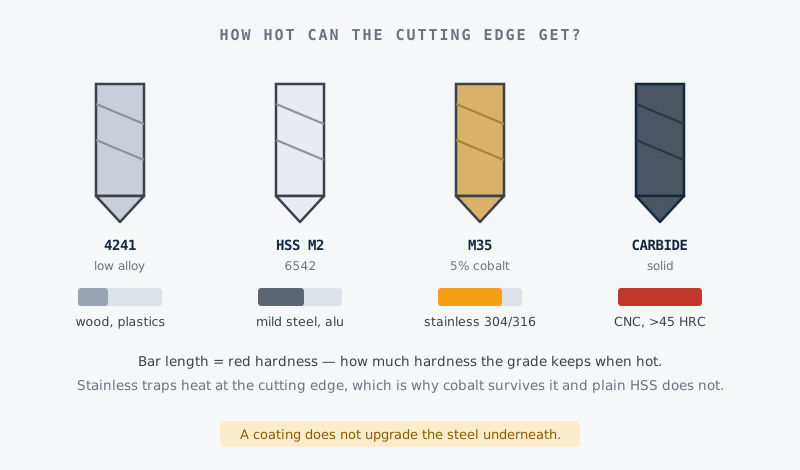
Two drill bits can look identical, cost three times different, and one will drill forty holes in stainless while the other stops at one. The difference is in the steel, and it is not visible from the outside. Here is what each grade actually is.
The grades, plainly
| Grade | What it is | Best for | Avoid for |
|---|---|---|---|
| HSS 4241 | Low-alloy tool steel. Cheapest bright-finish bits. | Wood, plastics, occasional soft steel | Any production metalwork |
| HSS M2 / 6542 | Proper high-speed steel — tungsten + molybdenum | Mild steel, aluminium, general trade use | Stainless, hardened steel |
| TiN-coated HSS | M2 with a titanium nitride surface layer, ~2,300 HV | Abrasive materials, cast iron, GRP, chipboard | Being resharpened (coating is surface only) |
| M35 cobalt (5% Co) | HSS with cobalt for red hardness | Stainless 304/316, tough alloys, heat-prone work | Impact use — slightly more brittle |
| M42 cobalt (8% Co) | More cobalt again, harder and hotter-running | Inconel, titanium, hardened alloys | General work — you are paying for nothing |
| Solid carbide | Tungsten carbide throughout, very hard, very brittle | CNC on rigid machines, hardened steel > 45 HRC | Hand drills — it will shatter |
What "red hardness" means and why it decides everything
The property that separates these grades is not room-temperature hardness — it is how much hardness they keep when hot. A cutting edge in steel runs at several hundred degrees. Plain HSS starts softening around 550 °C. Add 5% cobalt and it holds its edge meaningfully hotter; that is M35.
This is why cobalt is the answer for stainless specifically. Stainless has poor thermal conductivity, so the heat generated at the cutting edge stays at the cutting edge instead of flowing away into the workpiece. The edge gets hot fast, and only a grade that stays hard when hot survives it.
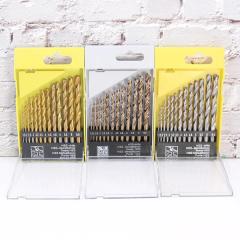
From our range
Industrial 13-Piece M35 Cobalt Twist Drill Bit Set for Stainless Steel
M35 cobalt set, 135° split point — the practical choice for anyone regularly drilling 304 or 316.
Coated or uncoated?
Coatings are a surface treatment a few microns thick, so they change how the bit behaves at the surface without changing the steel underneath.
- Bright / uncoated — the slickest surface, lowest friction. Best for aluminium and copper, where the enemy is material welding into the flutes.
- Black oxide — a thin oxide layer that holds cutting oil and resists rust in storage. Cheap, mildly useful, mainly a corrosion and shelf-appearance benefit.
- TiN (gold) — a genuinely hard ceramic layer, around 2,300 HV against roughly 900 HV for HSS. Extends life in abrasive materials. Worth it for cast iron, fibreglass and chipboard.
- TiAlN (dark violet/black) — forms a protective aluminium-oxide skin at high temperature. Designed for high-speed dry machining, not for hand drills.
Rolled or fully ground — the difference nobody advertises
Independent of grade, there are two ways to make a twist drill:
- Roll forged. Round stock is heated and the flutes are rolled in. Fast and cheap. The flute profile is approximate and concentricity is average, so holes come out slightly oversize and the bit is more likely to wander.
- Fully ground. The flutes are ground from solid bar on a CNC grinder. Accurate flute geometry, concentric point, a genuinely sharp edge. Costs more to make and produces an on-size hole.
For wood and rough work, rolled bits are perfectly adequate and the price difference is real money at volume. For metalwork, fully ground is the one buyers come back for — the difference shows up within a dozen holes.
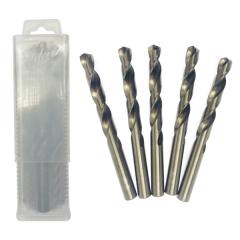
From our range
Industrial M2 HSS Fully Ground Twist Drill Bit (DIN 338) – OEM
Fully ground M2 to DIN 338 — the standard specification for metalworking distribution.
What to stock, if you are buying for resale
From what moves in the markets we ship to, a sensible core range is narrower than most catalogues suggest:
- 01HSS M2 fully ground, DIN 338, 1–13 mm — the volume line. Sells to every trade.
- 02M35 cobalt in the common sizes (3, 4, 5, 6, 8, 10 mm) — for the stainless fabricators. Higher margin, and the customer who needs it knows exactly why.
- 03TiN-coated sets — the retail-facing product. Gold bits sell on the shelf, and in abrasive material they genuinely last longer.
- 04A step drill or two — solves the sheet metal problem that twist drills handle badly, and it is an easy add-on sale.
Solid carbide and M42 are specialist lines. Unless you are supplying CNC shops directly, they tie up money on a shelf. Worth quoting when asked, rarely worth stocking deep.
Products mentioned in this guide
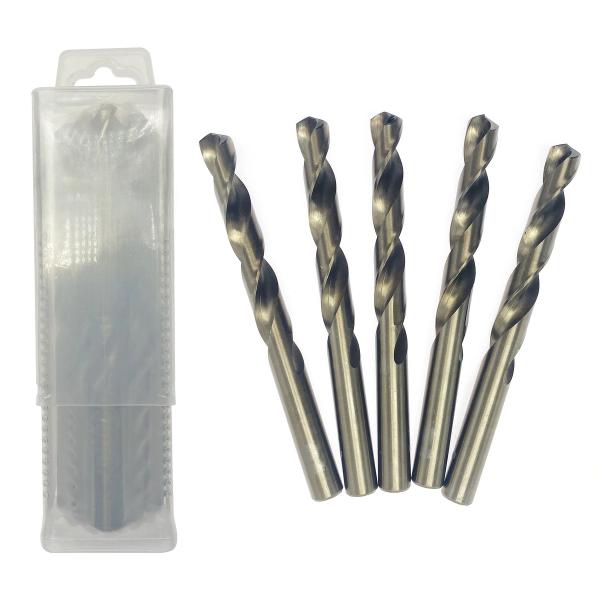
HSS Twist Drill Bits
Industrial M2 HSS Fully Ground Twist Drill Bit (DIN 338) – OEM
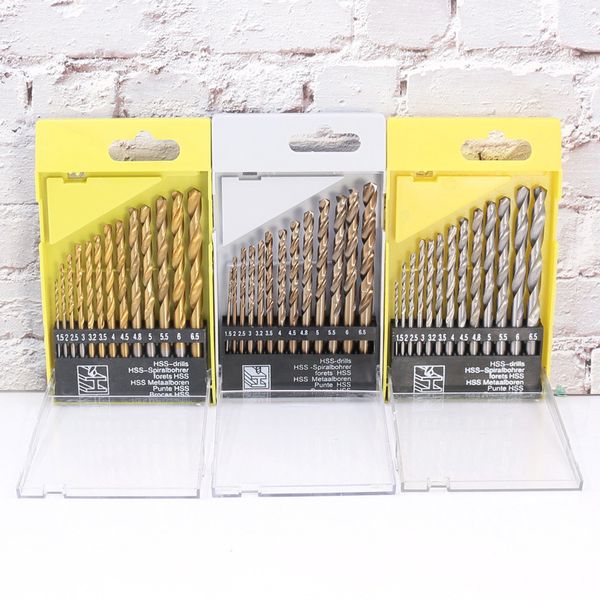
M35 Cobalt Drill Bits
Industrial 13-Piece M35 Cobalt Twist Drill Bit Set for Stainless Steel
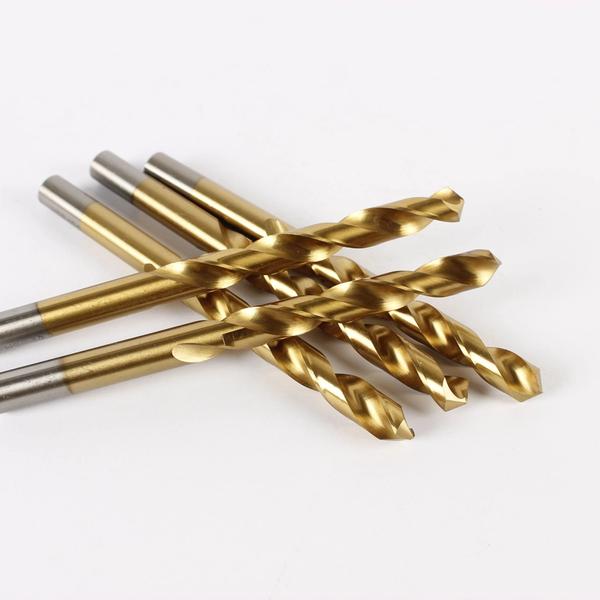
HSS Twist Drill Bits
Industrial Titanium Coated HSS Twist Drill Bits (DIN338, Metric Sizes) – OEM
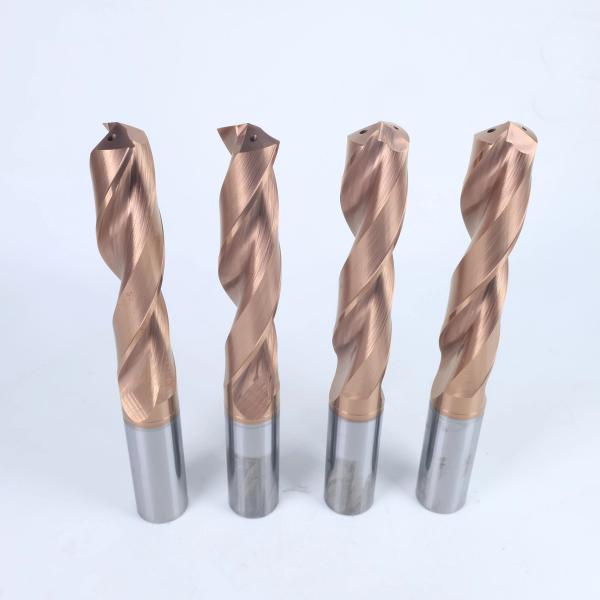
Carbide & Indexable Drills


