TCT Saw Blade Tooth Count: Picking the Right Blade for Each Material
Tooth count, grind type and hook angle decide whether a blade rips fast, cuts glass-smooth, or destroys the panel. Here is what each number on the blade actually means.
Every TCT blade has three numbers that decide what it is good at: how many teeth, how those teeth are ground, and what angle they lean at. Get the combination wrong and a perfectly good blade will burn the timber, chip the melamine, or take three times as long to rip a board.
None of it is complicated once you know what each one does.
Tooth count: speed against finish
This is a straight trade-off. Fewer teeth means bigger gullets between them, which means more space to carry sawdust out of the cut. More teeth means each tooth removes less material and leaves a finer surface, but the gullets are small and clog.
| Job | Teeth | Why |
|---|---|---|
| Ripping solid timber with the grain | 24–30T | Big gullets clear the long stringy chips that ripping produces |
| General site work, framing | 40T | The usable compromise — rips acceptably, crosscuts acceptably |
| Crosscutting hardwood | 60–80T | More teeth support the fibres at the cut line so they shear instead of tearing |
| Melamine, veneered ply, laminate | 80–100T | Fine tooth pitch prevents the surface chipping out |
| Aluminium and non-ferrous | 80–100T (TCG) | Small bite per tooth stops the blade grabbing the soft metal |
For a 184 mm (7¼") circular saw the equivalents scale down: 24T for framing, 40T general, 60T for finish work.
Tooth grind: the shape of the cutting edge
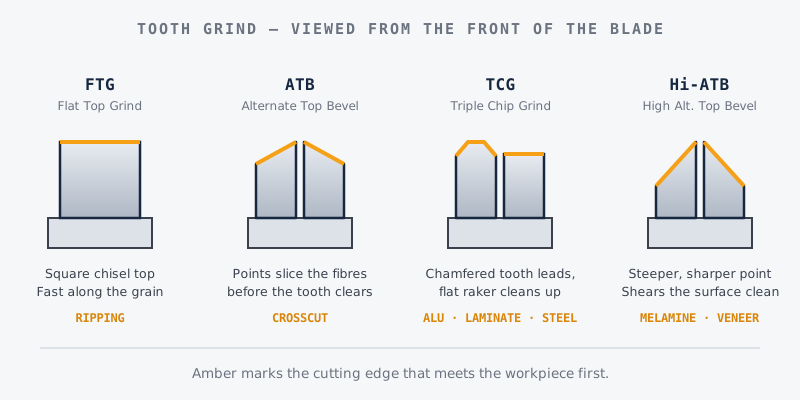
- FTG — Flat Top Grind. Square-topped teeth that act like tiny chisels. Fast and efficient along the grain, poor across it. Ripping blades.
- ATB — Alternate Top Bevel. Teeth bevelled alternately left and right, so the points slice the wood fibres before the body of the tooth removes the waste. The standard crosscutting grind and what most general-purpose blades use.
- TCG — Triple Chip Grind. A chamfered "trapeze" tooth alternating with a flat raker. The chamfered tooth takes the brunt of the cut and the flat one cleans up. Tough and long-lasting — the grind for aluminium, plastics, laminate and dry-cut steel.
- Hi-ATB — High Alternate Top Bevel. ATB with a steeper bevel angle, typically 25–40°. A very sharp, fragile point that shears melamine and veneer surfaces cleanly. Excellent finish, shorter life, and it will not tolerate nails.
From our range
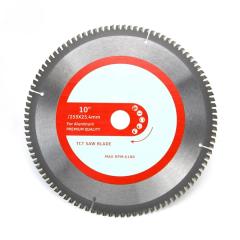
Industrial 10" TCT Circular Saw Blade (250x30mm, 100T) for Fine Woodworking
250 mm 100T for melamine, veneered ply and hardwood crosscuts where edge chipping is unacceptable.
Hook angle: the one people forget
Hook (or rake) angle is how far the tooth leans forward relative to the blade centre. It controls how aggressively the blade pulls itself into the work.
| Hook angle | Use | Behaviour |
|---|---|---|
| +15° to +20° | Table saw ripping, hand-held circular saws | Aggressive self-feed, fast cutting |
| +5° to +10° | General purpose | Moderate feed, controllable |
| 0° to −5° | Mitre saws, sliding compound saws | Blade does not climb toward the operator |
| −5° to −6° | Aluminium, non-ferrous, radial arm saws | Prevents the blade snatching soft metal and self-feeding |
Cutting metal with a circular saw
Dry-cut metal blades are a different product from wood blades that happen to be carbide-tipped. They use a TCG grind, a negative hook, and a much lower running speed. Used correctly, a dry-cut steel blade produces a cool, sparkless cut, a clean burr-free edge and a chip you can pick up in your hand — a considerable improvement over an abrasive chop saw for anyone cutting sections all day.
- Never fit a wood blade to steel. Positive hook teeth grab, and carbide tips shatter.
- Clamp the section properly. Metal cutting demands rigid work-holding.
- Let the blade run at its rated speed — a blade meant for 1,300 RPM on a steel-cutting saw will not survive a 5,000 RPM wood saw.
From our range
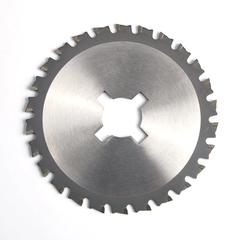
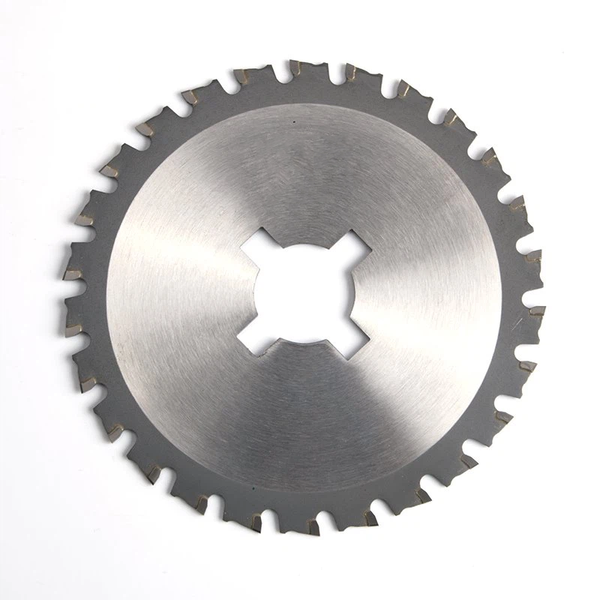
Industrial TCT Metal Cutting Circular Saw Blade (Cold Cut Technology) – OEM
TCT cold-cut blade for steel — negative hook and TCG teeth for burr-free cuts without sparks.
A note on blade body quality
Tooth specification gets all the attention, but the steel plate matters as much. A blade body that is not properly tensioned and flattened will wobble at speed, which widens the kerf, burns the cut and puts side load on the carbide tips until they crack off. On a cheap blade the tips usually do not wear out — they get knocked off by a body that will not run true.
What to look for: a laser-cut expansion slot pattern, visible tensioning, and tips brazed square with a consistent grind. Held up to a light, a good blade is dead flat.
Products mentioned in this guide
TCT Saw Blades — Wood
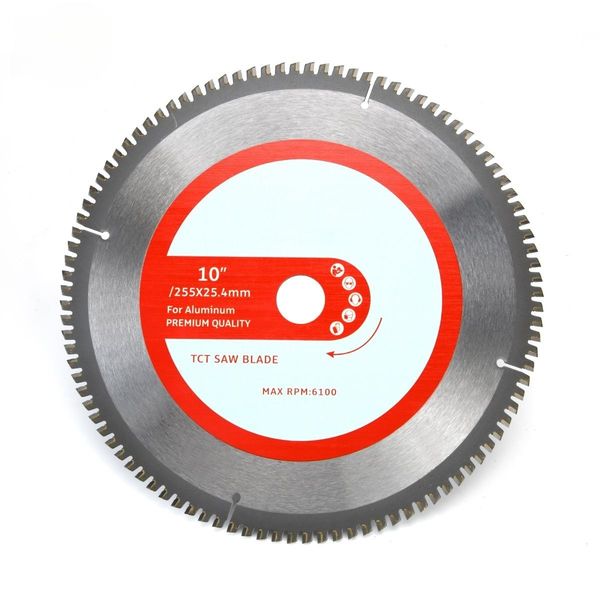
Industrial 10" TCT Circular Saw Blade (250x30mm, 100T) for Fine Woodworking
TCT Saw Blades — Wood
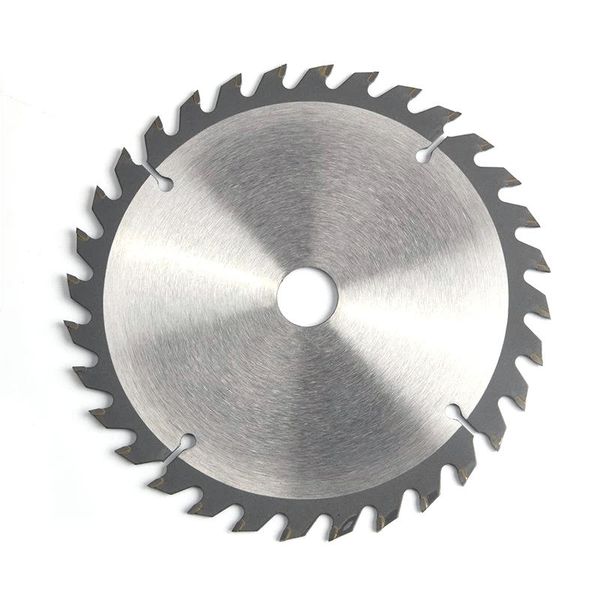
Industrial TCT Wood Cutting Circular Saw Blade (30T/40T/60T) – OEM Bulk
TCT Saw Blades — Wood
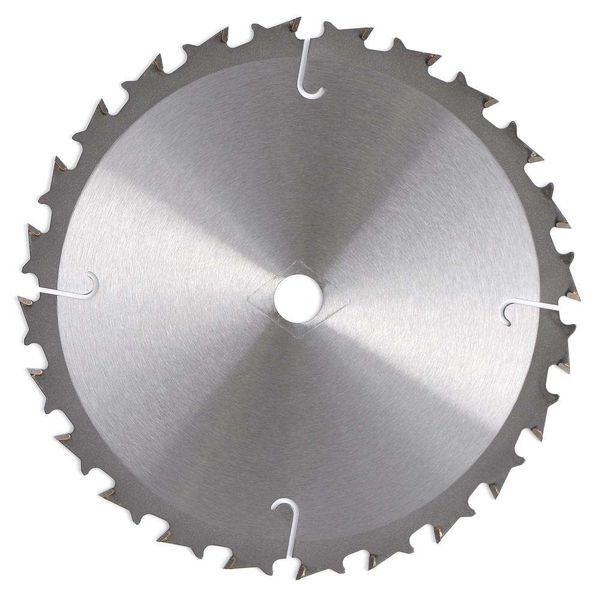
Industrial 7-1/4" (184mm) TCT Framing Saw Blade (24T, 5/8" Arbor) – OEM
TCT Saw Blades — Metal


