Why Drill Bits Keep Breaking — and the Five Fixes That Actually Work
Snapped bits, burnt tips, holes that wander off centre. Each failure leaves a signature that tells you exactly what went wrong. Here is how to read it and what to change.
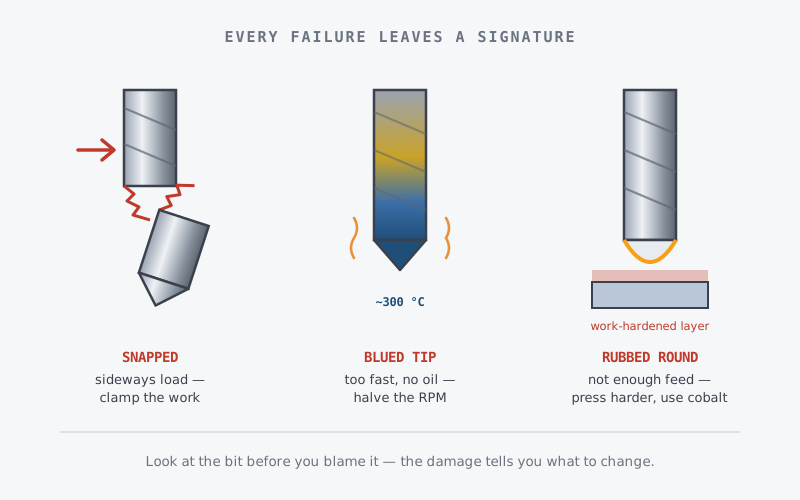
A drill bit that fails tells you why, if you look at it. A bit snapped clean across the flutes was loaded sideways. A bit with a blue tip was run too fast. A bit with rounded corners and a shiny, polished cutting edge was rubbing instead of cutting. Each one points to a different fix.
These five cover nearly every bit that gets thrown away before its time.
1. Snapped across the flutes — sideways load
A twist drill is strong in compression and weak in bending. It will take enormous downward force and almost no side force. Bits snap when:
- The drill is held at an angle and levered while cutting — very common with hand-held cordless drills on vertical surfaces.
- The workpiece moves. A sheet of metal that grabs and spins on the last millimetre of breakthrough will snap a small bit instantly. Clamp the work.
- The bit is fed into an existing hole slightly off-axis, so one flute takes the whole cut.
The fix is technique, not the bit: clamp the workpiece, keep the drill square, and let go of the trigger the instant it breaks through. For anything below 4 mm, use a drill press if you have one — small bits do not survive a wobbly hand.
2. Blue or straw-coloured tip — too fast
Colour on a bit is a temper colour, and it is a thermometer. Straw yellow is roughly 220 °C. Blue is roughly 300 °C. HSS starts losing hardness above about 550 °C, so a blue bit is not yet destroyed — but it is being run hard enough that it is heading there, and the edge dulls fast.
Almost always this is speed. See the drill speed chart for the RPM your material and diameter actually want. Halve what you were using and press harder.
The second cause is no lubrication on steel. Cutting oil does not just cool — it stops the chip from welding itself to the cutting edge, and a welded chip is what starts the heat spiral.
3. Polished, rounded cutting edge — rubbing
A bit that comes out with a mirror-bright, rounded cutting edge and no wear elsewhere was not cutting. It was skating on the surface, generating heat and hardening the material underneath.
This is the classic stainless steel failure. 304 and 316 work-harden aggressively: rub the surface once and you create a layer harder than the annealed material below it. Now the bit cannot get through the layer it just made.
- Prevent it: low RPM, heavy constant feed, cutting oil, and never let the bit spin without cutting.
- If it has already happened: you cannot drill through a work-hardened glaze with the same bit. Grind or punch past it, or start a fresh hole.
- Use the right grade: M35 cobalt (5% cobalt) keeps its hardness far hotter than plain HSS. In stainless it is not a luxury, it is the difference between one hole and forty.
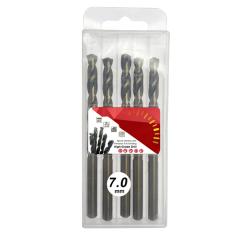
From our range
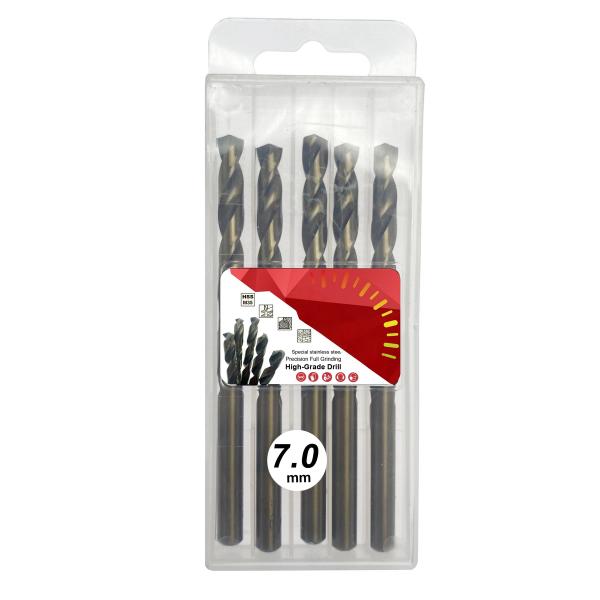
Industrial M35 Cobalt HSS Twist Drill Bit for Stainless Steel (Inox) – OEM
M35 cobalt, amber finish — the standard answer to stainless work-hardening.
4. Hole wanders off centre — no start point
A conventional 118° bit has a chisel edge at the very centre that does not cut. It pushes. On a flat surface that push makes the tip skate before it bites, so the hole ends up wherever the bit stopped wandering.
Three fixes, cheapest first:
- 01Centre-punch. A firm punch mark gives the chisel edge somewhere to sit.
- 02Use a 135° split point bit, where the cutting edges reach almost to the centre. It starts where you put it, no punch needed.
- 03For larger holes, drill a pilot first — but see the next section, because pilot holes are also over-used.
5. Large bits chattering or grabbing — wrong pilot strategy
Pilot holes are useful and also frequently wrong. A pilot larger than the chisel edge of the final bit removes the material that would have supported the cut, so the big bit's cutting edges grab and chatter, especially in thin sheet.
- Rule of thumb: the pilot should be about the width of the final bit's chisel edge — roughly 10–15% of the final diameter, not half of it.
- In sheet metal, skip pilots and twist drills entirely above about 10 mm. A step drill cuts a clean round hole without grabbing, and one tool covers a whole size range.
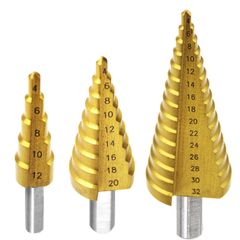
From our range
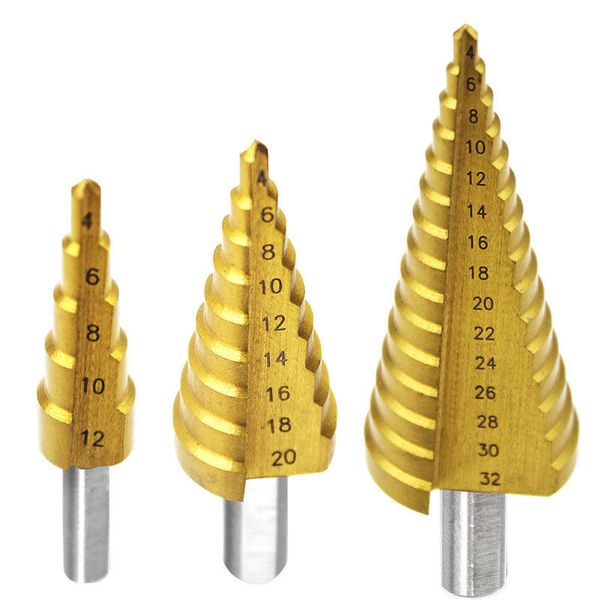
HSS M35 5% Cobalt Step Drill Bit 3-Piece Set (4-12/20/32mm) for Stainless Steel
M35 cobalt step drill — for sheet and tube where a twist drill would grab and triangulate the hole.
When the bit really is the problem
Sometimes technique is fine and the bit is simply the wrong specification for the work:
| Material / job | Right grade | What happens with the wrong one |
|---|---|---|
| Mild steel, general trades | HSS M2 (6542) | Low-alloy 4241 bits dull after a few holes |
| Stainless, Inconel, titanium | M35 / M42 cobalt | Plain HSS glazes and stops at the first hole |
| Abrasive: cast iron, GRP, chipboard | TiN-coated HSS | Uncoated edges wear round quickly |
| Hardened steel > 45 HRC | Solid carbide | HSS will not cut it at any speed |
| Sheet metal above 10 mm | Step drill or hole saw | Twist drills grab and cut triangular holes |
One more thing worth saying plainly to your customers: fully ground bits and rolled bits are not the same product. A rolled bit is formed from round stock and the flutes are pressed, which is fast and cheap but leaves the geometry approximate. A fully ground bit is cut from solid on a CNC grinder, so the flutes are accurate, the point is concentric, and the hole comes out on size. In steel the difference in life is obvious within a dozen holes.
Products mentioned in this guide
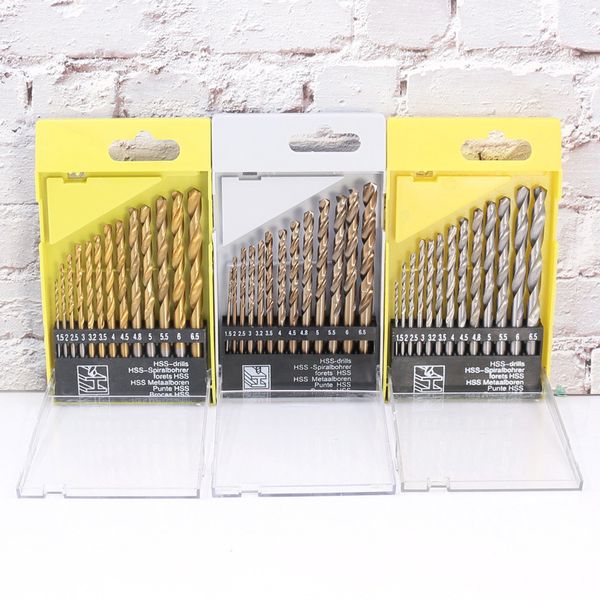
M35 Cobalt Drill Bits
Industrial 13-Piece M35 Cobalt Twist Drill Bit Set for Stainless Steel
M35 Cobalt Drill Bits
Industrial M35 Cobalt HSS Twist Drill Bit for Stainless Steel (Inox) – OEM
Step Drills & Hole Saws
HSS M35 5% Cobalt Step Drill Bit 3-Piece Set (4-12/20/32mm) for Stainless Steel
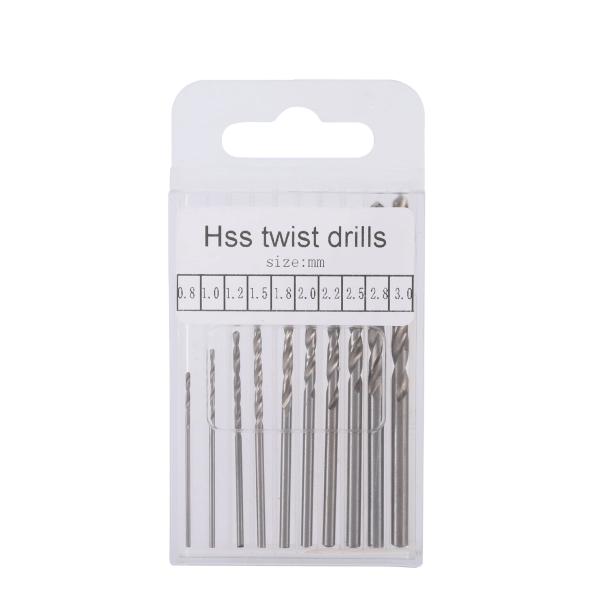
HSS Twist Drill Bits


