Free tool
Drill Speed Calculator
Most drill bits do not wear out — they get cooked. Printed speed charts assume a plain HSS bit and a machine that can hit any RPM you like, and say neither out loud. This one asks what bit you are holding and what you are holding it in, then tells you the speed to set and whether your drill can even get there.
- Target speed
- 1,100RPM
- Set your machine to
- 1,100RPM
- Cutting speed
- 28 m/min
- Feed
- 0.12 mm/rev
Handbook range: 1,000–1,200 RPM (Vc 25–30 m/min). On a drill press that works out to about 134 mm/min of downfeed.
This machine can hold the right speed for that hole.
Coolant: Cutting oil or soluble-oil mix — always
Chips should look like: Long silver spirals coming off both flutes
Blue or straw-coloured chips mean the edge is past its tempering temperature. Stop, cool it, halve the speed and push harder.
The one formula worth knowing
Every drill bit has a cutting speed (Vc) — how fast the outer corner of the cutting edge should travel through the material, in metres per minute. It belongs to the material and the bit, not to your machine. Your drill is marked in RPM, so you convert:
RPM = Vc × 1000 ÷ (π × D) ≈ Vc × 318 ÷ D
Two things fall out of that division, and between them they explain most of what goes wrong:
- Bigger bit, slower speed. The outer edge of a 13 mm bit travels more than four times as far per revolution as a 3 mm bit. Large holes want low RPM — which is why a big hole in steel belongs in a pillar drill, not in a cordless trigger held flat out.
- Harder material, slower speed. Stainless takes roughly a third of the speed of mild steel. Aluminium takes two to three times more.
- And the one charts leave out: better bit, faster speed. A TiN-coated bit tolerates about 25% more, M35 cobalt about 40% more, solid carbide well over double. Every printed chart was set in plain HSS.
Full drill speed chart
Every material at the six diameters people actually search for. Switch the bit grade and the whole table recalculates — which is exactly what a printed chart cannot do, because it was set in HSS and never told you.
| Material | Vc (m/min) | 3 mm | 5 mm | 6 mm | 8 mm | 10 mm | 13 mm |
|---|---|---|---|---|---|---|---|
| Mild / low-carbon steel | 28 | 3,000 | 1,800 | 1,500 | 1,100 | 900 | 700 |
| Stainless steel 304 / 316 | 12 | 1,250 | 750 | 650 | 480 | 380 | 290 |
| Cast iron | 22 | 2,300 | 1,400 | 1,150 | 900 | 700 | 550 |
| Aluminium | 70 | 7,400max | 4,500max | 3,700max | 2,800 | 2,200 | 1,700 |
| Brass / bronze | 50 | 5,300max | 3,200max | 2,700 | 2,000 | 1,600 | 1,200 |
| Copper | 38 | 4,000max | 2,400 | 2,000 | 1,500 | 1,200 | 950 |
| Hardwood | 100 | 10,600max | 6,400max | 5,300max | 4,000max | 3,200max | 2,400 |
| Plastics / acrylic | 36 | 3,800max | 2,300 | 1,900 | 1,450 | 1,150 | 900 |
Greyed figures marked “max” are above what most drill presses can reach — the material is not the limit there, your machine is. “As charted” uses the grade each material is normally drilled with (cobalt for stainless, HSS for the rest) and matches our published speed chart
Coolant and chips, by material
| Material | Coolant | Chips should look like |
|---|---|---|
| Mild / low-carbon steel | Cutting oil or soluble-oil mix — always | Long silver spirals coming off both flutes |
| Stainless steel 304 / 316 | Cutting oil, generously — lubrication matters more than cooling | Short tight curls, still silver |
| Cast iron | None — drill dry | Grey powder and short flakes, not spirals |
| Aluminium | Paraffin, WD-40 or a wax stick | Long stringy spirals — clear them before they pack the flutes |
| Brass / bronze | Dry, or a light oil | Short broken chips — brass is meant to chip, not curl |
| Copper | Light oil | Long soft spirals |
| Hardwood | Dry | Clean shavings, no smoke and no scorch marks |
| Plastics / acrylic | Dry, clear the flutes often | Continuous ribbon |
Common questions
What RPM should I drill stainless steel at?+
What speed for a 10 mm drill bit?+
What is the drill speed formula?+
Does a cobalt bit let me drill faster?+
Why do my drill bits keep burning out?+
My drill press will not go slow enough — what do I do?+
What feed rate should I use when drilling?+
Related guides
From our range
The grades these speeds assume
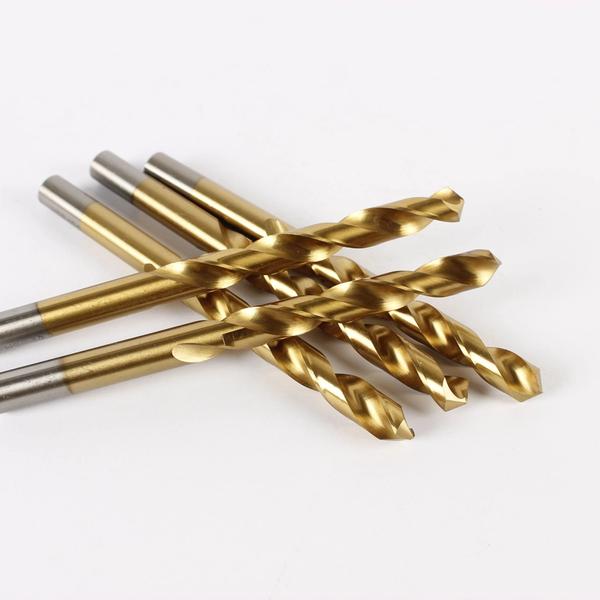
Fully ground HSS M2 for the general trades, M35 cobalt with a 135° split point for the stainless fabricators, step drills for sheet. Factory-direct, OEM/ODM, mixed cartons — quoted in 24 hours.
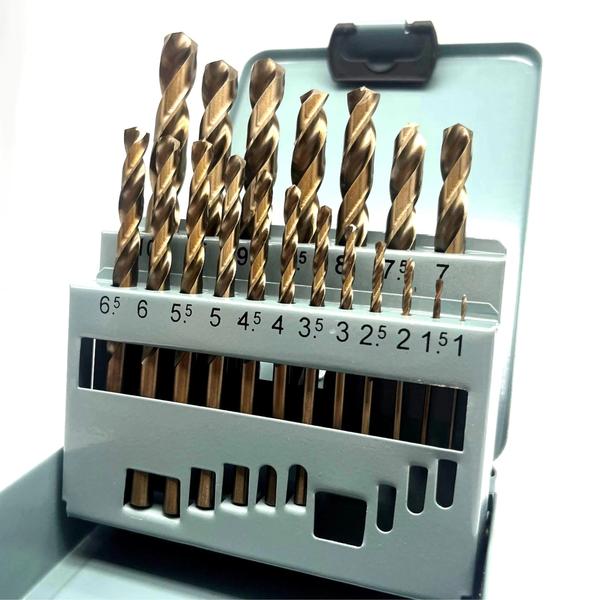
HSS Twist Drill Bits
Industrial 19-Piece HSS M2 Twist Drill Bit Set (Bright Finish, 1-10mm)
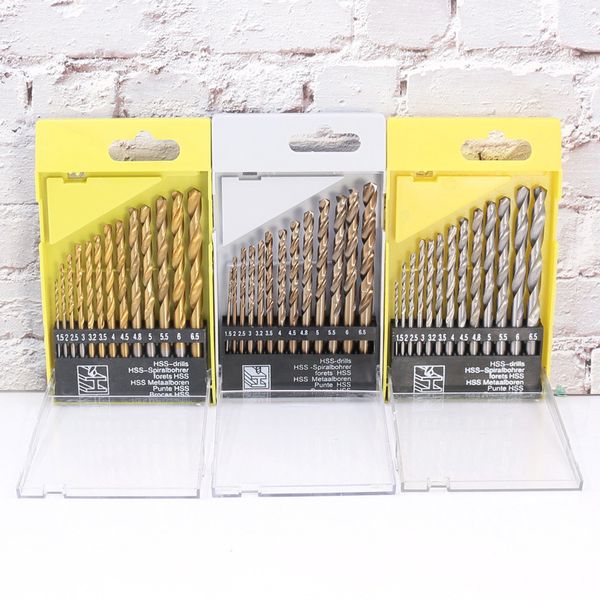
M35 Cobalt Drill Bits
Industrial 13-Piece M35 Cobalt Twist Drill Bit Set for Stainless Steel
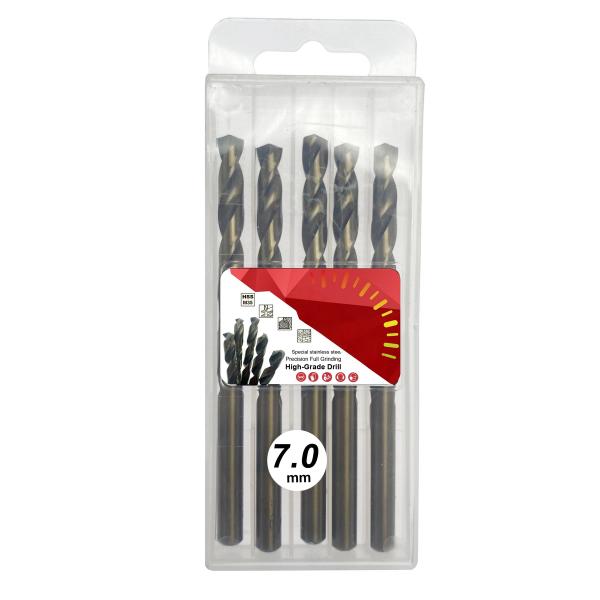
M35 Cobalt Drill Bits
Industrial M35 Cobalt HSS Twist Drill Bit for Stainless Steel (Inox) – OEM
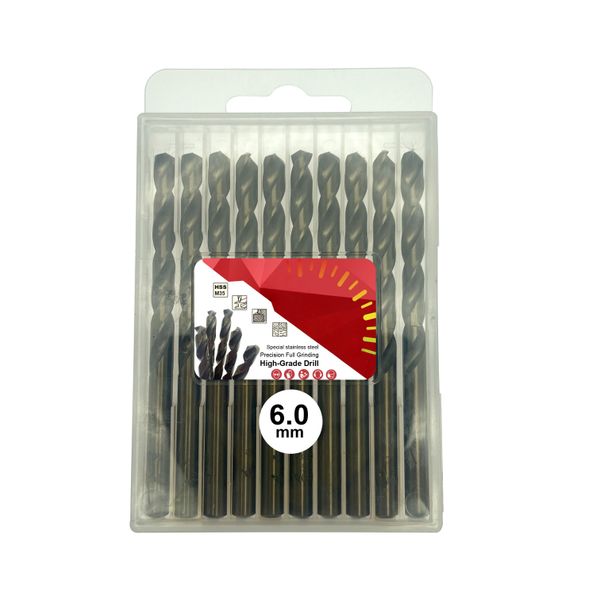
M35 Cobalt Drill Bits
Industrial M35 Cobalt HSS Twist Drill Bits for Stainless Steel (Metric Sizes)
Step Drills & Hole Saws
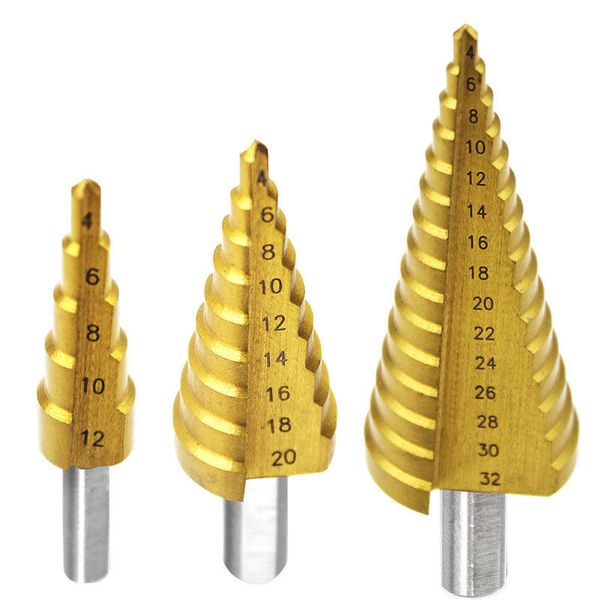
HSS M35 5% Cobalt Step Drill Bit 3-Piece Set (4-12/20/32mm) for Stainless Steel
HSS Twist Drill Bits