Free tool
Saw Blade Tooth Count Selector
“40 teeth” means nothing on its own. What the cut feels is tooth pitch — the gap between teeth — and the same pitch is 30 teeth on a 7¼" blade and 48 on a 12". Pick the job and the diameter, and this gives you the count, the grind and the hook angle that actually produce the cut.
Used only for the teeth-in-cut check below. Tube and profile: enter the wall thickness, not the outside size.
The usable compromise. Not the best at anything, adequate at everything a site saw meets.
- Tooth grind
- ATB
- Alternate top bevel scores the fibres on both sides of the kerf, so it rips acceptably and crosscuts acceptably.
- Hook angle
- +10° to +15°
- Moderate feed, still controllable in a hand-held saw.
- Teeth in the cut at 19 mm
- 2.1 with 40T
- Inside the 2–4 band this job wants — the load is shared and no single tooth is doing the work.
Why pitch, not count
Each tooth removes a chip whose size depends on the feed, the speed and the distance to the next tooth. Move that distance and you change the chip; keep it and you keep the cut — on any diameter. So every recommendation on this page is a pitch band, converted:
Teeth = π × D ÷ pitch
- Coarse pitch (25–33 mm) rips. Ripping makes long stringy chips; the deep gullets between few teeth are what carry them out. More teeth here means packed gullets, heat and burn marks.
- Fine pitch (8–13 mm) crosscuts and finishes. Cutting across the grain severs fibres end-on, and they tear unless the tooth beside them is holding them. Sheet goods and laminates need it finer still, because the face chips at the exit.
- Grind decides the edge quality; hook decides who is in charge. ATB scores, TCG survives hard and gummy materials, FTG clears. A positive hook feeds itself; zero or negative makes the blade wait for you — mandatory on mitre saws and in aluminium.
- Teeth in the cut is the sanity check. For most work, 2–5 teeth should be in the material at any instant. Fewer and a single tooth catches the edge (the thin-tube problem); more and the gullets cannot clear.
Tooth count by job and blade diameter
Every cell is the same tooth pitch scaled to the diameter — which is why a 7¼" site blade and a 12" mitre saw blade for the same job have different counts and cut the same way.
| Job | Grind · hook | 136 5⅜" | 165 6½" | 184 7¼" | 210 8¼" | 250 10" | 300 12" | 355 14" |
|---|---|---|---|---|---|---|---|---|
| Ripping softwood (with the grain) | FTG · +15° to +20° | 18T | 18T | 18–24T | 18–24T | 24–30T | 28–36T | 36–44T |
| Ripping hardwood | FTG · +10° to +15° | 18T | 18–24T | 18–28T | 24–30T | 28–36T | 36–44T | 40–48T |
| General purpose / framing | ATB · +10° to +15° | 18–24T | 24–28T | 28–30T | 30–36T | 40T | 44–48T | 54–60T |
| Crosscutting hardwood, mitres | ATB · +5° to +10° | 30–44T | 40–54T | 44–60T | 48–66T | 60–80T | 72–96T | 84–108T |
| Plywood, MDF, chipboard | ATB · +5° to +10° | 36–44T | 44–54T | 48–60T | 54–72T | 66–84T | 80–100T | 90–120T |
| Melamine, laminate, veneered board | Hi-ATB · 0° to +5° | 44–54T | 54–66T | 60–72T | 66–84T | 80–100T | 96–120T | 108–120T |
| Aluminium & non-ferrous | TCG · −5° to −6° | 44–54T | 54–66T | 60–72T | 66–84T | 80–100T | 96–120T | 108–120T |
| Plastics, acrylic, PVC | TCG · 0° to +5° | 36–48T | 44–60T | 48–66T | 54–72T | 66–90T | 80–108T | 90–120T |
| Thin steel — sheet, tube, profile (≤ 3 mm wall) | TCG · 0° to −5° | 30–40T | 40–48T | 44–54T | 48–60T | 60–72T | 72–84T | 84–100T |
| Thick steel — bar, plate, heavy section (> 4 mm) | TCG · −5° | 24–28T | 28–36T | 30–40T | 36–44T | 40–54T | 48–60T | 60–72T |
T = π × D ÷ pitch, snapped to the counts blades are actually made in
Common questions
How many teeth for cutting plywood?+
24 tooth vs 40 tooth vs 60 tooth — which saw blade do I need?+
What tooth count for cutting aluminium?+
What is the hook angle on a saw blade?+
ATB vs TCG vs FTG — what do the grinds mean?+
How many teeth for a 7¼ inch circular saw blade?+
Why does the blade burn the wood?+
Related guides
From our range
The tooth counts this page recommends, in stock
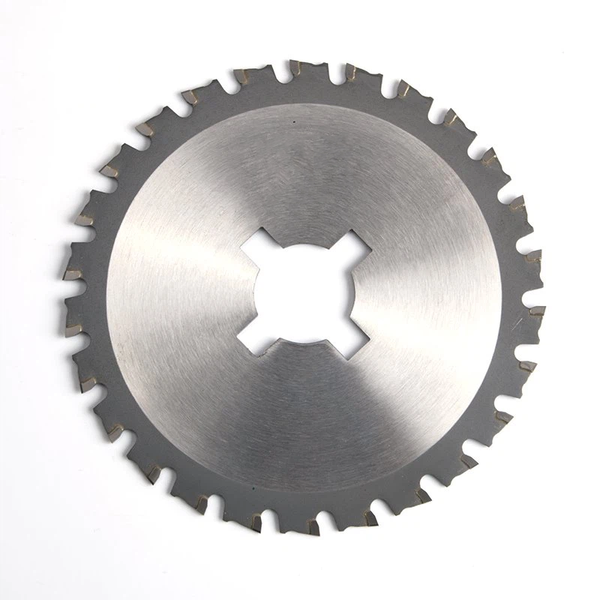
24T framing, 40T / 60T general purpose, 80T and 100T fine finish, MDF blades and TCG cold-cut for steel — 136 to 355 mm, laser-cut plates, OEM colour boxes. Factory-direct, mixed containers, quoted in 24 hours.
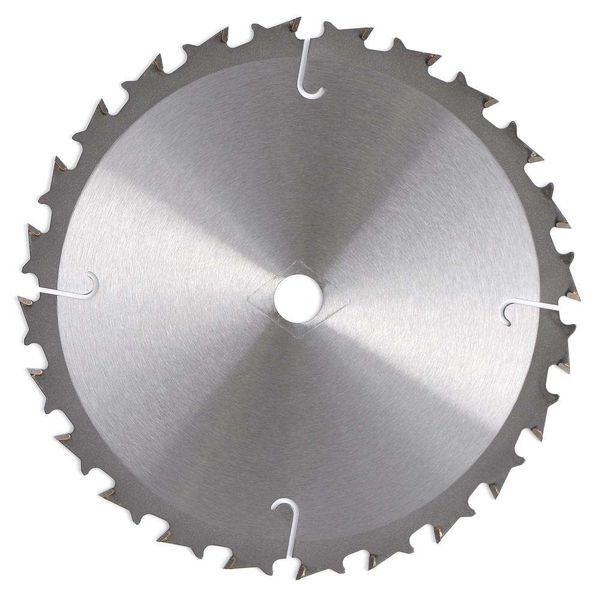
TCT Saw Blades — Wood
Industrial 7-1/4" (184mm) TCT Framing Saw Blade (24T, 5/8" Arbor) – OEM
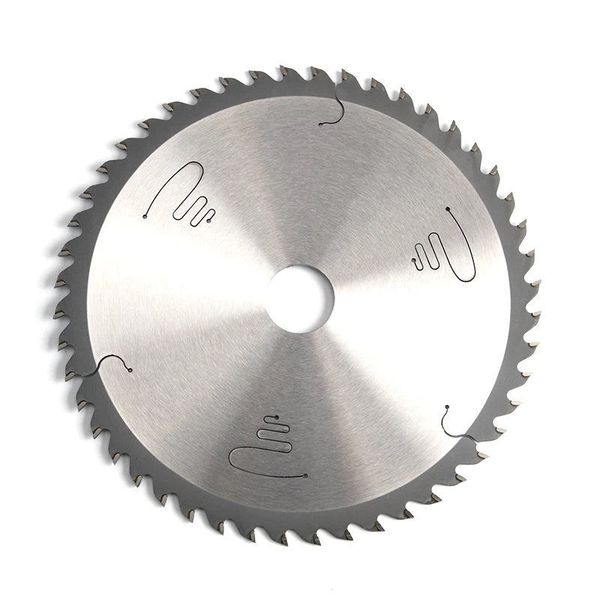
TCT Saw Blades — Wood
Industrial 7-1/4" TCT Wood Saw Blade (40T/60T General Purpose) – OEM
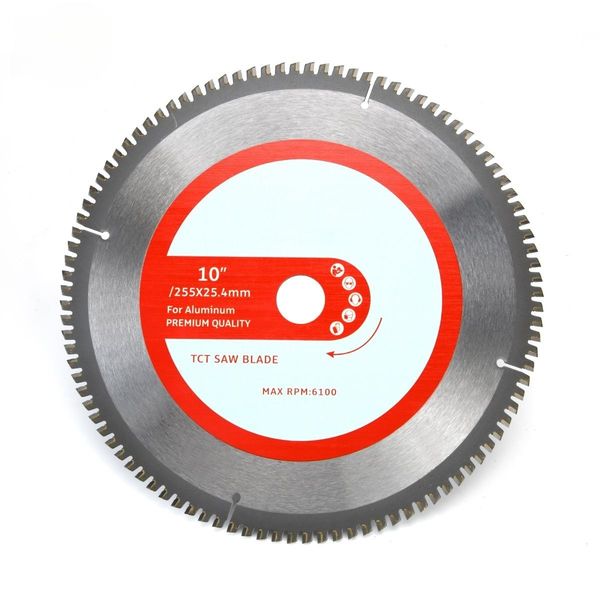
TCT Saw Blades — Wood
Industrial 10" TCT Circular Saw Blade (250x30mm, 100T) for Fine Woodworking
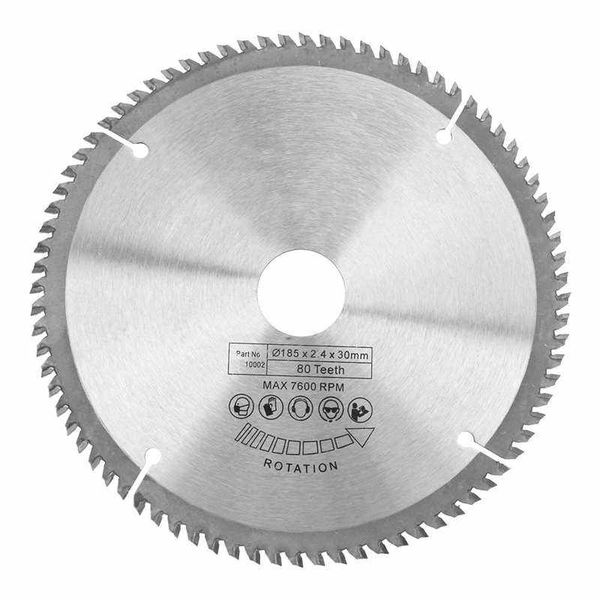
TCT Saw Blades — Wood
Industrial 7-1/4" (185mm) TCT Circular Saw Blade (80T Fine Finish) – OEM
TCT Saw Blades — Wood
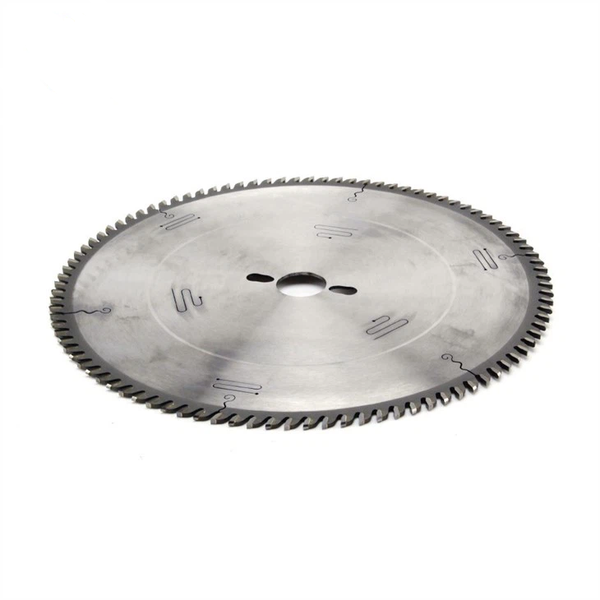
Industrial TCT Circular Saw Blade for MDF & Hardwood Cutting – OEM Supply
TCT Saw Blades — Metal